Latest News

Latest News

LSD-like drug and magnet therapy: Sacramento explores new treatments for depression

KCRA3 recently visited the IPN to learn more about our work developing next-generation depression treatments. IPN Director David Olson walked the crew through JRT, an LSD-inspired molecule created by flipping two atoms in LSD's structure, which promotes neuroplasticity in animal studies while showing reduced hallucinogenic potential.

Reaction rounds up atoms into unusual cyclic compounds

Sulfonimidamides have become popular in the past decade or so as chemists explore novel motifs for drug candidates. They feature a central sulfur atom with a double bond to oxygen, a double bond to nitrogen, a single bond to another nitrogen, and a single bond to carbon. Cyclic sulfonimidamides, which have distinct properties from standard heterocycles, are particularly intriguing, but there aren’t many ways to make them.

‘Enchanted Broomstick’ Protein Walks on Two Stubby Legs to Keep Our Nerve Cells Alive

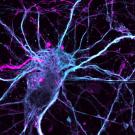
nerve cell resembles a vast tree with branches that communicate with thousands of other cells. To function, it depends on a motor protein that walks on two legs, hauling urgent cargo from the center of the cell to the faraway tips of every branch. Scientists have unveiled a new structure of this walking protein, showing how cells control it.

Creating Hallucination-free, Psychedelic-like Molecules by Shining Light on Life’s Basic Building Blocks

UC Davis researchers have developed a new method that uses light to transform amino acids — the building blocks of proteins — into molecules that are similar in structure to psychedelics and mimic their interaction with the brain. Like psychedelics, these molecules activate the brain’s serotonin 5-HT2A receptors, which promote cortical neuron growth, and could be candidates to treat a host of brain disorders, such as depression, substance-use disorder and PTSD. However, they don’t trigger hallmark hallucinogenic behavior in animal models.

Psychedelics and Non-hallucinogenic Analogs Work Through the Same Receptor, Up to a Point

Understanding exactly how psychedelics promote new connections in the brain is critical to developing targeted, non-hallucinogenic therapeutics that can treat neurodegenerative and neuropsychiatric diseases. To achieve this, researchers are mapping the biochemical pathways involved in both neuroplasticity and hallucinations.  

UC Davis Researchers Achieve Total Synthesis of Ibogaine, Creating Opportunities to Study Its Therapeutic Properties

Ibogaine — a psychoactive natural product — has attracted attention for its anti-addictive and anti-depressant properties. But ibogaine is a finite resource, extracted from plant materials like the iboga shrub (Tabernanthe iboga) and the small-fruited voacanga tree (Voacanga africana). Further, its use can lead to irregular heartbeats, introducing safety risks and an overall need to better understand how its molecular structure leads to its biological effects.

Exploring the Psychedelics Within Us

Our bodies are pharmaceutical factories. From the hormones that regulate our blood sugar to the neurotransmitters that act as the body’s natural painkillers, these endogenous — produced within the body — chemicals ensure our functionality and survival.

But did you know that our bodies also naturally produce psychedelics?

In the 1950s, researchers found chemical signatures of N,N-dimethyltryptamine (DMT) in mammalian bodies, including in humans.